Selling a Saddle: What Is It Worth?
November 1, 2026 · By Horse Marketplace · 6 min read
Selling a Saddle: What Is It Worth?
The short answer: most second-hand synthetic saddles sell for £100 to £250. Good branded leather saddles usually fetch £350 to £700, and premium French or handmade saddles can still make £800 to £1,500 or more. The brand, the condition of the tree and flocking, and whether the size suits lots of horses matter far more than what you paid.
Those ranges come from asking prices at UK second-hand saddle dealers, checked in November 2026. A dealer's price includes their margin and a trial period, so expect a private sale to land a little lower.
Below we cover what pushes the price up or down, how to work out a fair figure for your saddle, and the pros and cons of each way to sell it.
Typical second-hand prices
Type of saddle | Typical dealer asking price | Examples seen |
Older or unbranded leather | £95 to £200 | Older English-made GPs |
Synthetic | £100 to £250 | Wintec, Thorowgood and similar |
Good branded leather | £350 to £700 | Albion, Jefferies, Barnsby, Ideal |
Premium French or handmade | £800 to £1,500+ | CWD, Devoucoux, Prestige, Amerigo |
Prices checked November 2026 at UK second-hand saddle dealers. They are asking prices, not guaranteed sale prices, and they move with condition, age and size.
Brand matters, but so does demand. Well-known British and French brands hold their value best. Synthetics and budget leather saddles lose value faster, because new ones are cheap.
Popular sizes sell fastest. A 17" or 17.5" seat in a medium or medium-wide fit suits the most horses and riders. Very narrow, extra-wide and small pony saddles have fewer buyers, so they often take longer to sell or need a lower price. Adjustable-gullet saddles are popular because they suit more horses.
What adds or knocks off value
Factor | Adds value | Knocks off value |
Tree | Sound, checked by a saddler | Any doubt at all. A broken tree makes a saddle close to worthless |
Flocking | Recently checked or reflocked | Hard, lumpy or uneven panels (reflocking costs around £80 to £150) |
Leather | Supple, clean, conditioned | Cracks, dry patches, mould, deep scratches |
Stitching and billets | Strong girth straps and stitching | Worn or rotting girth straps, loose stitching |
Seat | Smooth and even | Wrinkles or a twisted seat, which can point to tree damage |
Paperwork | Serial number, receipt, fitting notes | No serial number or history |
Extras | Spare gullet plates, saddle cover | Missing parts for an adjustable saddle |
Check the tree before you list. Rest the pommel against your thigh and gently pull the cantle towards you. A sound tree flexes a little. A lot of give, or any clicking, suggests the tree is broken. If you're not sure, ask a qualified saddle fitter to check it. Many buyers will ask, and an honest answer protects you.
Find the serial number. Most quality brands stamp one under the flap or on the billet guard. The maker can often use it to confirm the model, tree width and age, which reassures buyers and helps them check the saddle isn't stolen.
How to work out your price
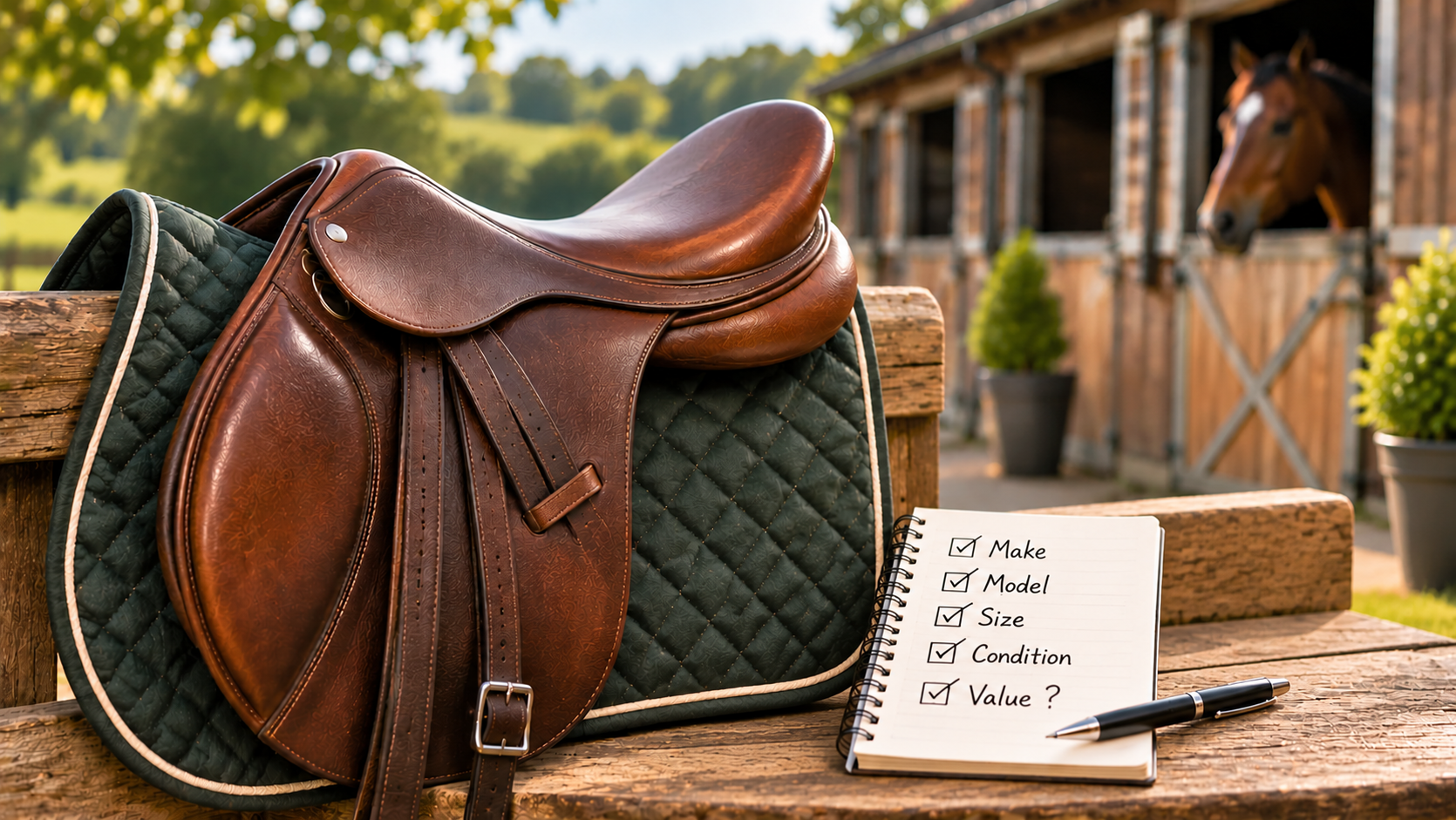
Write down the details. Brand, model, seat size, tree width or gullet, flap size, colour, age and serial number.
Look at sold prices, not asking prices. On eBay, search for your brand and model, then tick "Sold items" in the filters. That shows what buyers actually paid.
Compare like with like. Match the model, size and condition as closely as you can. Ignore listings with no photos of the panels and underside.
Check a dealer or two. Second-hand saddle dealers list their stock online. Knock 10% to 20% off their price for a private sale, since you won't offer a trial or a fitting.
Be honest about condition. Then price in the middle of what you found. Leave a little room for offers.
If nothing has sold at your price after a few weeks, drop it by 5% to 10%, or add better photos. A fairly priced saddle in a popular size usually sells.
Where to sell, and what each route costs
As a worked example, here's roughly what you'd keep from a saddle that's worth £400.
Route | What it costs you | You keep (appox.) | Good for |
Dealer buys outright, or part-exchange | Their margin. Often around half of the resale value | About £200 | Speed and no hassle |
Dealer sells on commission | Commonly around 25%, sometimes a fixed fee | About £300 | Good saddles you don't want to sell yourself |
eBay (private seller) | No seller fees. The buyer pays eBay a fee on top | £400, less postage | Reaching a national audience |
Facebook groups and Marketplace | Free | £400 | Local sales, but no seller checks |
Horse Marketplace | Seller fee 8% including card fees, with no monthly fee on the Pay As You Sell plan. Lower on monthly plans | £368 | Selling to horse people, with card payment |
Dealer and commission figures are typical, not fixed. Always ask for the commission or buy-in price in writing before you hand a saddle over.
Dealers and commission sales suit you if you'd rather not deal with buyers, photos, postage and trial returns. A good dealer will tell you honestly what your saddle is worth. Many only take branded saddles in clean, saleable condition, and some charge a fee if you take your saddle back before it sells.
Selling it yourself gets you the most money, but you handle the questions, the photos, the postage or collection, and the time-wasters.
Writing a listing that sells
Photos (at least 8, in daylight)
Both sides, from the front and the back
The panels and the gullet from underneath
The seat, flaps and knee blocks close up
The serial number and the size stamps
Any marks or wear, shown honestly
Details buyers always ask for
Brand, model and age
Seat size, and how it was measured (most UK makers measure from the button to the centre of the cantle)
Tree width or gullet, and whether it's adjustable
Flap length, and whether it's forward cut
Wool or foam flocking, and when it was last checked
Which horses it has fitted, for example "16hh TB with medium withers"
Collection, postage, or both
Be honest. Buyers can't judge fit from photos, so an accurate description saves you returns and arguments. Say if it has been reflocked, repaired or needs work.
Stay safe
Only accept payment you can confirm has cleared before the saddle leaves you. Never accept an overpayment and refund the difference.
Don't hand over the saddle to a courier the buyer has arranged before you've been paid.
Post with a tracked, insured service and keep the receipt.
Before you list: checklist
[ ] Saddle cleaned and conditioned
[ ] Tree checked (by you, or by a saddle fitter if you're unsure)
[ ] Serial number, size stamps and any paperwork found
[ ] Sold prices checked for the same model and size
[ ] At least 8 clear daylight photos, including the underside
[ ] Measurements, fit and condition written up honestly
[ ] Collection, postage or both decided, with a tracked courier in mind
Sell your saddle on Horse Marketplace
Horse Marketplace puts your saddle in front of people who are already buying, selling and booking for their horses.
• No monthly fee to start. On the Pay As You Sell plan, you only pay when your saddle sells: a seller fee of 8%, including card fees. It's lower on our monthly plans.
• Card payment at checkout. Buyers pay by card through our payments provider, so there's no chasing bank transfers or worrying about fake payment screenshots.
• Verified sellers. Every seller passes Horse Marketplace Verify, an ID and face check, before their listings go live. Buyers can see you're genuine.
List your saddle · Read next: How to avoid horse buying scams