Horse Passports: What to Check When Buying
October 17, 2026 · By Horse Marketplace · 6 min read
Horse Passports: What to Check When Buying
The short answer: before you buy, make sure the passport describes the horse in front of you, the microchip scans and matches, and the seller hands it over on the day. After you buy, you have 30 days to register yourself as the new owner.
Every horse, pony and donkey in the UK must have a passport, and it must stay with the animal at all times. The seller must give it to you when you buy. You could be fined if you can't show a valid passport for a horse in your care.
A passport isn't proof of ownership, but it is the best single check you have that the horse is who the seller says it is. Here's what's inside it, and what to look for.
What's inside a horse passport
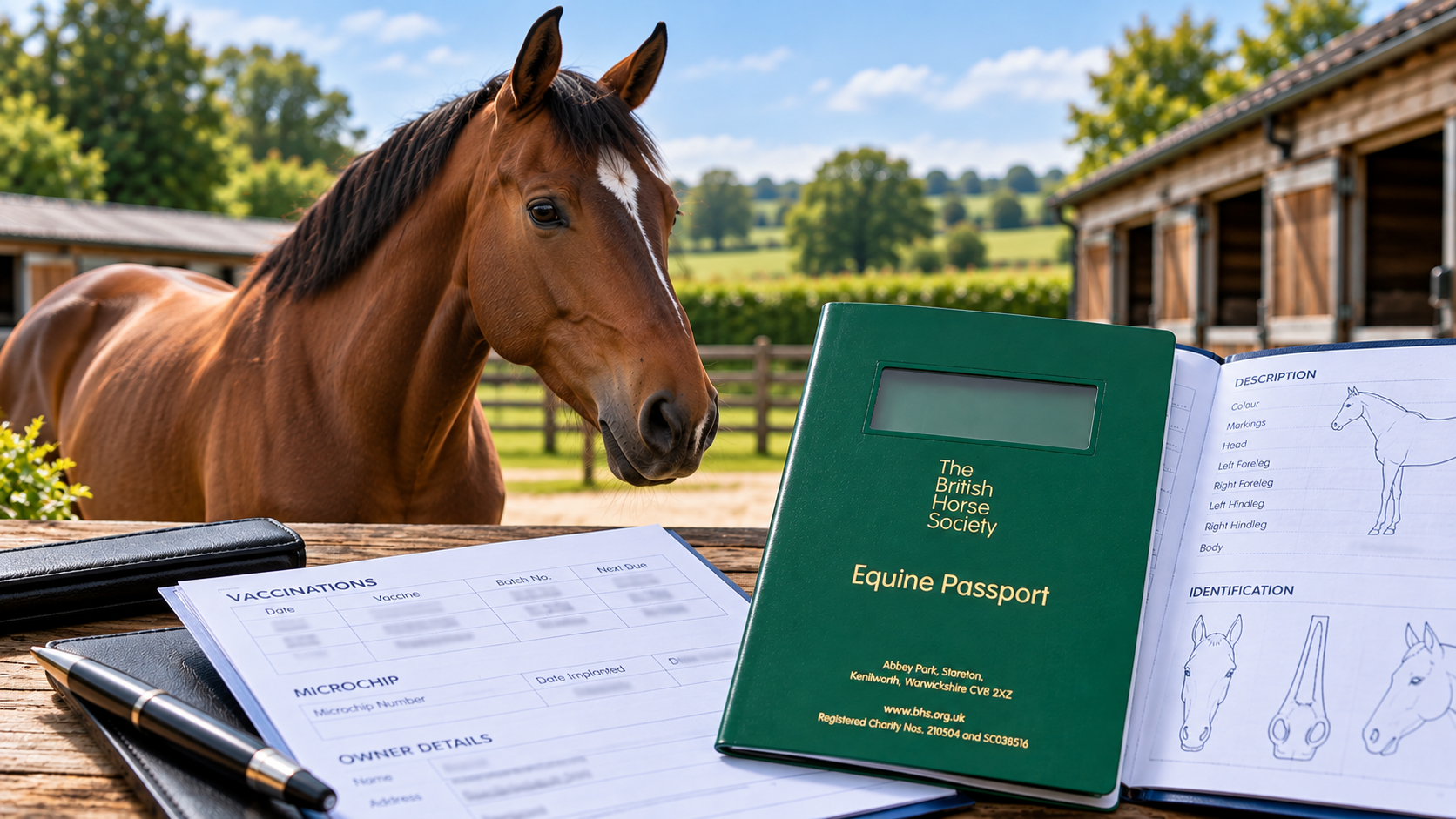
Passports are issued by dozens of Passport Issuing Organisations (PIOs), from breed societies to the British Horse Society, so layouts vary. Section numbers also changed for passports issued from 1 January 2016. Look for these parts:
Part | What it shows | Why it matters when buying |
Identification | UELN, name, species, breed, sex, colour, date of birth, microchip number | Confirms the horse's age and identity |
Silhouette diagram | Drawings of markings, whorls and scars, completed by a vet | The best way to match the passport to the horse |
Owner details | The registered owner | Shows who should be selling the horse |
Vaccinations | Flu and tetanus records, signed by vets | Many competitions and yards need an up-to-date flu record |
Food chain declaration | Whether the horse can ever be slaughtered for human consumption. Section II Part II in newer passports, Section IX in older ones | Affects which medicines a vet can give |
Medicines record | Certain drugs given to horses still in the food chain | Shows treatment history for some horses |
Breeding (some passports) | Sire, dam and studbook details | Backs up breeding claims in the advert |
What's a UELN? The Universal Equine Life Number is the horse's unique 15-character ID. It stays the same for life, even if the horse changes owners or countries.
What to check at the viewing
Ask the seller to have the passport ready, and take your time with it. Ideally, check it with your vet at the vetting.
Does the passport match the horse? Walk round the horse with the silhouette diagram. White markings, whorls (the swirls of hair on the forehead, neck and body) and scars should all be where the drawing shows them. If the silhouette doesn't match, a vet may treat the horse as if it has no passport at all.
Does the microchip match? Ask the seller or your vet to scan the chip, usually on the left side of the neck. The number should match the passport exactly. Then check it on the free National ChipChecker, which shows whether the chip is registered and which PIO issued the passport.
Is the age right? The date of birth should match the advert. If an "8-year-old" is 15 in the passport, ask why.
Who is the registered owner? If it isn't the seller, ask why not. There can be good reasons, such as a horse sold on before the last owner updated it, but you should get a clear answer.
Is it a duplicate or replacement? These are stamped as such. They're legal, but find out why the original was replaced. A duplicate also signs the horse out of the food chain permanently.
Is the horse signed out of the food chain? Many leisure horses are. It's not a problem, but it's permanent, and it can change which medicines a vet will use.
Are the vaccinations up to date? If you plan to compete or move to a livery yard, check the flu record meets their rules.
Does the breeding match the advert? If the horse is sold as registered with a breed society, the breeding pages should say so.
After you buy
Take the passport home with the horse. The seller must give it to you at the time of sale. If they don't, contact your local trading standards office for advice.
Update the ownership within 30 days. Send the passport to the PIO that issued it (the ChipChecker tells you which one). They'll add your details and update the Central Equine Database.
Keep the passport with the horse. That means at the yard and whenever the horse travels.
Show it to your vet when they treat the horse.
If the passport is lost, only the PIO that issued it can provide a duplicate. Fees vary, typically around £30 to £60, and the duplicate signs the horse out of the food chain.
Are passports going digital? Not for most horses yet. In England, the paper passport is still the legal document, alongside the horse's record on the Central Equine Database. Some PIOs, such as those for Thoroughbreds, now offer digital versions as well.
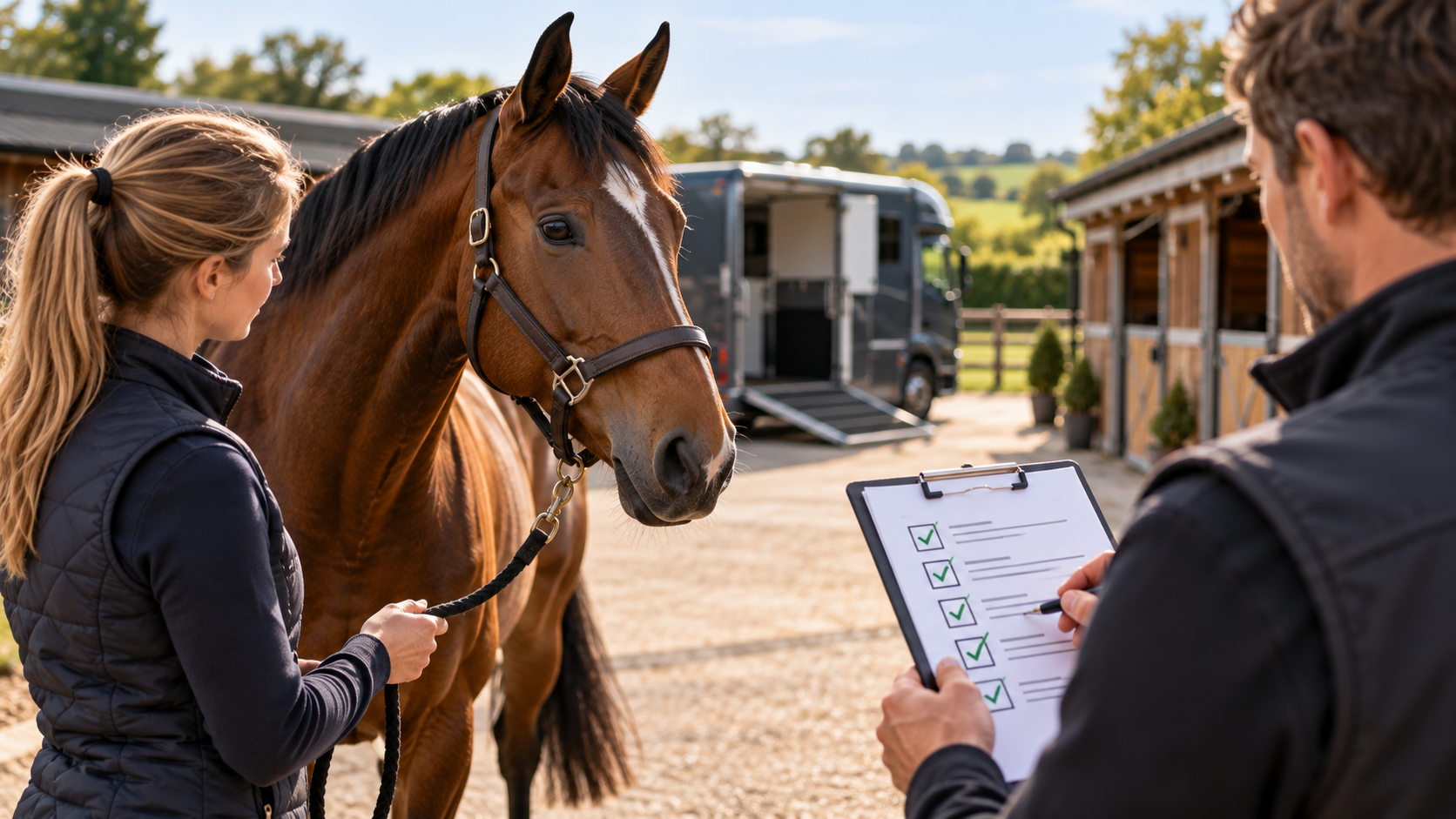
Passport checklist
Before the viewing
Ask for the UELN and microchip number
Check the chip on the National ChipChecker
Ask who the registered owner is
At the viewing
The silhouette matches the horse's markings, whorls and scars
The microchip scans and matches the passport
The date of birth matches the advert
You know whether it's an original, duplicate or replacement
You know the food chain status
The vaccinations meet your yard or competition rules
On the day you buy
You leave with the passport
Your receipt includes the horse's name, UELN and microchip number
You've diarised 30 days to update the ownership with the PIO
Buying on Horse Marketplace
Every horse and pony advert on Horse Marketplace includes the horse's passport UELN, so you can start your checks before you travel. Every seller completes an identity check before their advert goes live, and we review each advert before it's published.
Adverts are enquiry-only: you view the horse, check the passport, and agree the price directly with the seller. No money for a horse passes through Horse Marketplace.
Browse horses for sale · Read next: How to avoid horse buying scams
Sources (opened or seen 17 Oct 2026)
GOV.UK: Getting and using a horse passport: who needs one; keep it with the horse; show it to vets and on sale; fines; buyer updates PIO within 30 days; trading standards if no passport; ChipChecker link.
BHS: Duplicate passports: stamped duplicate, signed out of the food chain; only the original PIO can issue; £30 at the BHS; buyer can apply if the seller can't produce one.
Horse Passport Agency 2026 duplicate form: £36 duplicate, £60 with change of ownership; Section II Part II (Section IX in older passports).
BHS: Horse passport FAQs: purpose is to protect the food chain (e.g. bute); ChipChecker shows the issuing PIO.
Welsh Government horse guidance: sections I to IX; UELN 15 digits; seller must hand over the passport.
RCVS: a vet may proceed as if no passport is available if the silhouette doesn't match.
BHS: Is your horse microchipped?: microchip law in England, Wales and Scotland.
DAERA (Northern Ireland): EEN required on passport applications from 1 Feb 2026.
Digital passports: Defra answer to a written question, 6 Jan 2026 (summary, truncated); Thoroughbred digital passport rollout. The post avoids claiming what Defra plans next.