How to Avoid Horse Buying Scams
October 16, 2026 · By Horse Marketplace · 7 min read
How to Avoid Horse Buying Scams
The short answer: never pay anything for a horse you haven't seen in person, with its passport in front of you. Check the seller, the passport and the microchip yourself. Walk away from anyone who rushes you, won't let you visit, or asks you to pay a transport company first.
Horse scams are not new, and they are convincing. Police have warned that fraudsters copy real photos, videos and even ownership papers to make a horse that doesn't exist look genuine. In one case reported to Action Fraud, a buyer lost £6,800 on a horse that was supposedly being shipped from Germany. The average loss across reported cases was over £3,400.
Most scams follow a handful of patterns. Once you know them, they are much easier to spot.
The five most common horse buying scams
The horse that doesn't exist. A lovely horse is advertised at a tempting price, often with stolen photos and videos. Once you agree to buy, the horse is suddenly abroad, and a "transport company" or "agent" asks for money for shipping, insurance, documents or a ferry fee. The fees keep coming. There is no horse.
The deposit to hold. The seller says there's lots of interest and asks for a deposit by bank transfer to stop others viewing. Sometimes the horse is real but the seller isn't the owner. Sometimes it's a copy of someone else's advert.
The sob story at a bargain price. A well-bred, well-schooled horse is offered far below its value because of a bereavement, a divorce or a move abroad. A real seller in that position would still want you to visit. A scammer won't.
The horse that isn't what it seems. The horse exists, but it's older than stated, has a vice or lameness that has been hidden, or has been sedated for the viewing. Sometimes the passport belongs to a different horse.
Horsebox and trailer scams. The same tricks are used on vehicles. Prices well below the market, a seller who "works away", and a request to pay before you've seen it.
Red flags
In the advert
The price is well below what similar horses sell for
Photos look professional or appear in other adverts (try a reverse image search)
The description is vague about age, height, history or where the horse is kept
No passport details, or the seller won't share the UELN
A sad story explaining the low price and the need for a quick sale
In the messages
The seller won't speak on the phone or video call
You can't visit, because the horse is abroad, in transit or "with a friend"
They push you to pay quickly, because "someone else is coming tomorrow"
They ask for payment by bank transfer, money transfer service, gift cards or crypto
A third party, such as a transporter or agent, appears and asks for fees
They only offer their own vet, or a vetting before you've seen the horse
They ask you to move the conversation off the site where you found the advert
Check the seller, the passport and the microchip
The seller
Speak to them on the phone, and ask questions only the real owner would know: feeding, shoeing, how the horse travels and hacks.
Visit the horse where it lives, not in a lay-by or at a "friend's" yard on the day.
Ask whether the name in the passport is theirs. If it isn't, ask why.
For a dealer or yard, look up the business on Companies House and read independent reviews.
Ask for references, such as their farrier, instructor or livery yard owner.
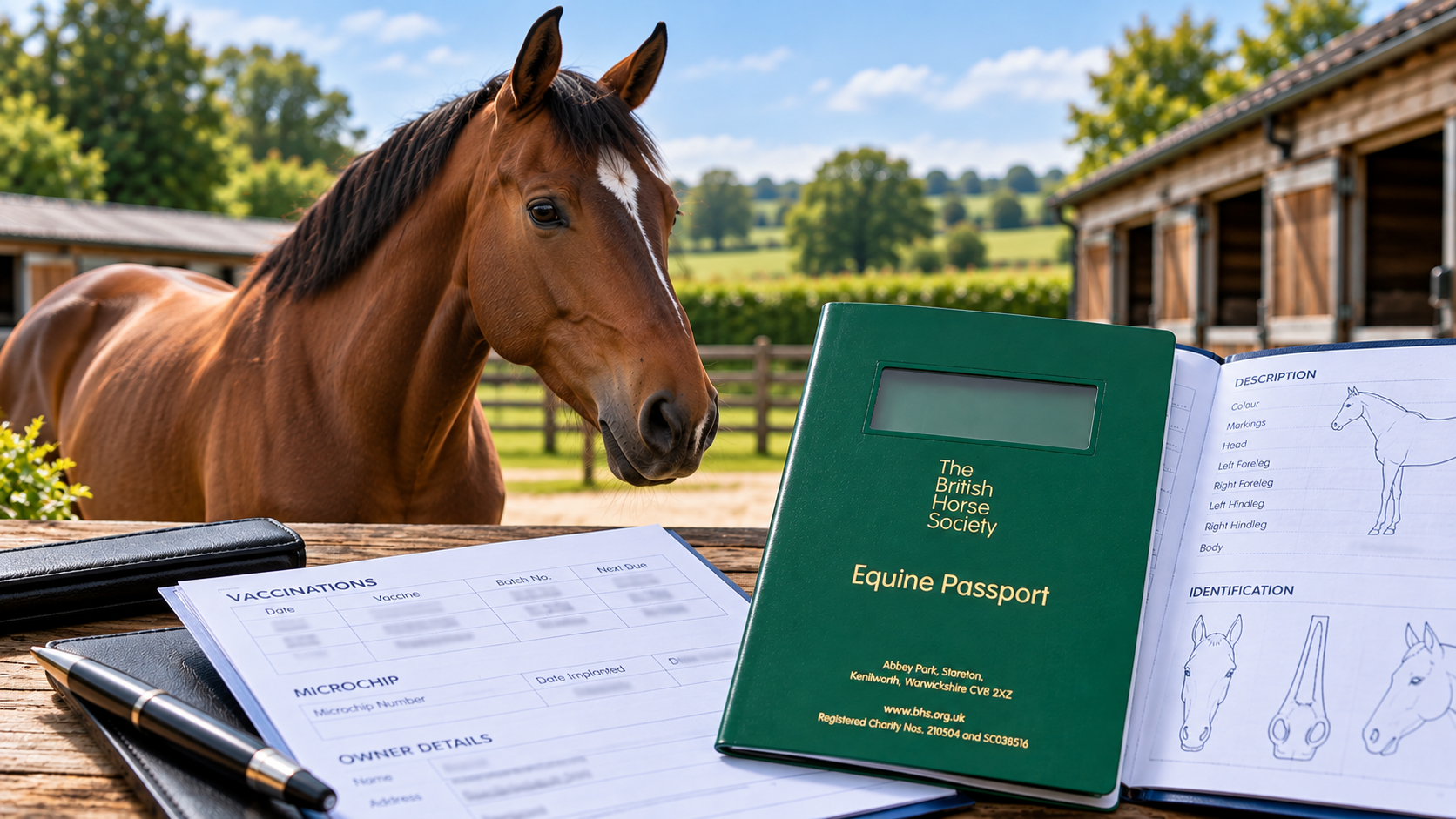
The passport
Every horse, pony and donkey in the UK must have a passport, and the seller must hand it to you when you buy. Before you agree a price:
Match the horse to the description. Colour, markings, sex and height should match. The silhouette diagram of markings is the best check.
Check the age. The year of birth is in the passport, and should match the advert and the horse's teeth.
Note the UELN. This is the horse's 15-character Universal Equine Life Number. It stays with the horse for life.
Look for the microchip number and where it was implanted, usually the left side of the neck.
The microchip
In England, Wales and Scotland, every horse, pony and donkey must be microchipped by law. At the viewing, ask the seller or your vet to scan the chip. The number on the scanner should match the passport.
Then enter the number in the free National ChipChecker on the Central Equine Database. It shows whether the chip is registered, which organisation issued the passport, and whether the horse has been reported missing or stolen.
Once you buy, you have 30 days to tell the passport issuing organisation that you're the new owner.
The vetting
Use your own vet, not one the seller suggests. A pre-purchase vetting can include a blood sample, which can be tested later for sedatives or painkillers if problems appear after you buy.
Paying safely
Pay nothing before you've viewed. Not a deposit, not a transport fee, not a "refundable" holding fee.
Pay the person named in the passport, or a business you've checked, and get a written receipt or bill of sale with the horse's name, UELN and microchip number.
Hand over money and passport at the same time. Don't leave with the horse and no passport, or the passport and a promise.
Never use money transfer services, gift cards or crypto. You are very unlikely to get that money back.
Don't pay a third party. A genuine seller doesn't need you to pay their transporter.
If you pay by bank transfer to a UK account and it turns out to be a scam, your bank must normally refund you up to £85,000 under rules in force since October 2024. That protection doesn't cover overseas transfers, and a deal that goes wrong with a real seller may be treated as a civil dispute instead. Prevention is still far better than a claim.
If you think you've been scammed
Call your bank straight away. Most UK banks can be reached on 159. The sooner you call, the better the chance of stopping the payment.
Report it to the police. In England, Wales and Northern Ireland, use Report Fraud (it replaced Action Fraud in December 2025) or call 0300 123 2040. In Scotland, call Police Scotland on 101.
Report the advert to the site where you found it so it can come down before anyone else is caught.
Keep everything: messages, adverts, screenshots, bank details and receipts.
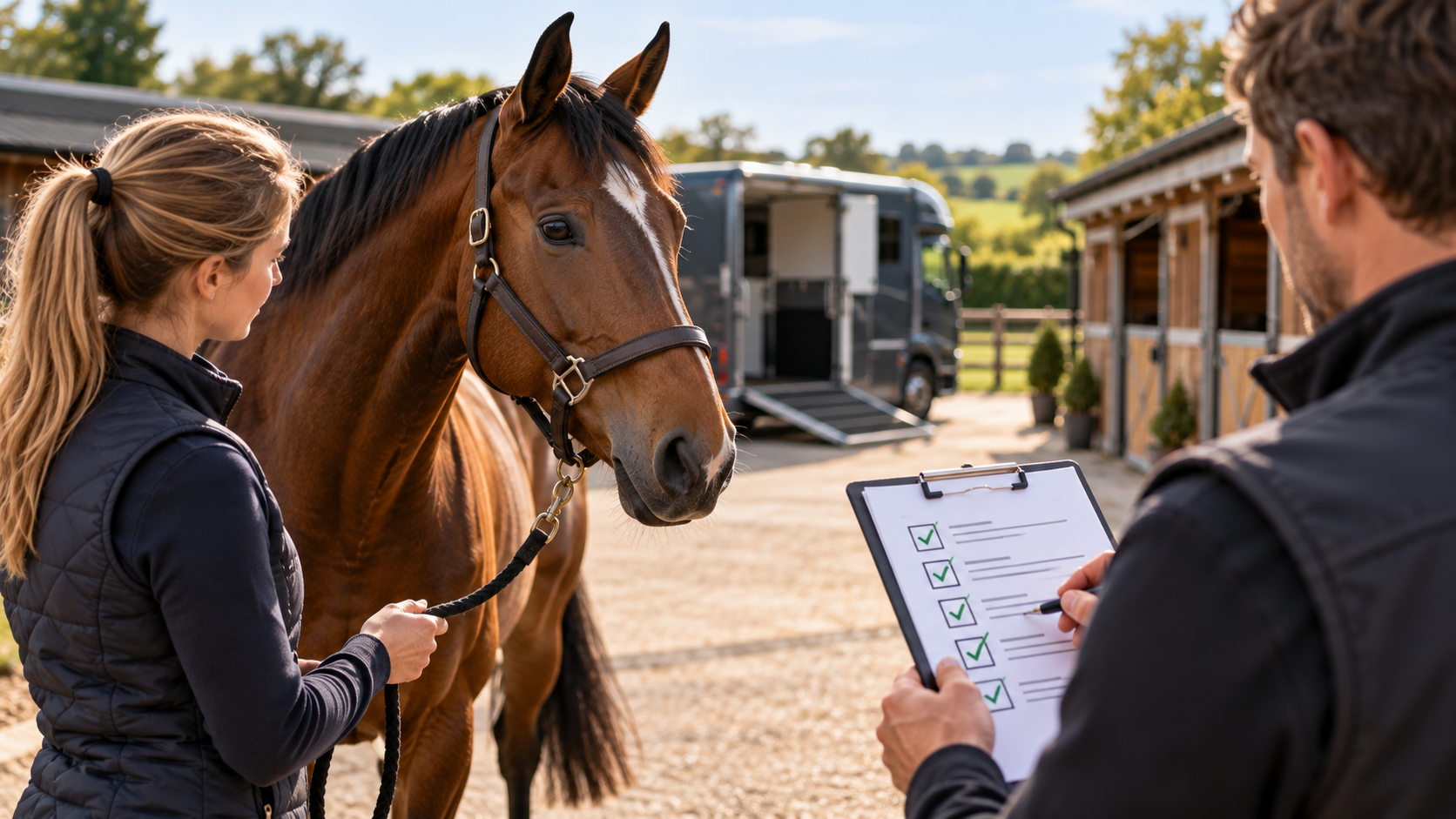
Checklist before you travel to a viewing
You've spoken to the seller on the phone
You have the yard address, and it's where the horse lives
You have the UELN and microchip number, and the chip shows on the National ChipChecker
The price is in line with similar horses
You haven't paid anything yet
You're taking someone experienced with you
You've booked, or can book, your own vet for a vetting
How Horse Marketplace helps
We built Horse Marketplace to make these checks easier.
ID-verified sellers. Every seller completes an identity check with Stripe for valid banking details, and photo ID and a face check before they can list or take bookings.
Every advert checked before it goes live. We review adverts before they're published.
Passport details on the advert. Sellers give the horse's UELN, so you can check it before you travel.
You deal with the seller directly. Adverts are enquiry only: you arrange the viewing and agree the price with the seller. No money for a horse passes through Horse Marketplace, so nobody should ever ask you to pay us, or anyone else, before you've seen the horse.
Spotted an advert that doesn't look right? Use the report button on the listing and we'll look into it.
Sources
Action Fraud: equine fraud warning (2018): fake adverts on equestrian sites, horses "abroad", transport fees; £68,717 lost 2014 to 2017, average £3,436; £6,800 Germany case.
Yorkshire Evening Post: copied documents, photos and videos; bargain price with bereavement or marital breakdown story.
Action Fraud: pet fraud advice: avoid bank transfer, escalating fees.
BHS: Is your horse microchipped?: microchipping law in England, Wales and Scotland; ChipChecker uses.
Redwings: check the chip on the CED to verify the passport belongs to the horse.
Welsh Government horse guidance: UELN 15 digits; seller must give the passport; 30 days to update.
GOV.UK: Report Fraud replaces Action Fraud (4 Dec 2025): reportfraud.police.uk, 0300 123 2040. Scotland: Police Scotland 101 (Which?).
Which?: Are fraud refund rules working?: £85,000 APP refund cap; UK Faster Payments and CHAPS only; international transfers not covered. Civil dispute exclusion: LBC / PSR data.
Horse & Hound: online scams: below-market prices; don't pay without meeting.